Reviews
Great Film!
This is a lovely film that gives you a peek into the lives of some very talented artisans in Oaxaca, Mexico. I took this film to Kazakhstan in April and with Carolyn's blessing showed it to my natural dyeing workshop participants. They loved it! It didn't matter that the film was in neither Russian nor Kazakh - textiles have a universal language. The film led to a very lively discussion about how could the weavers in Mexico be doing what looked to be Kazakh ornaments( motifs) in their carpets. They were excited to see the different styles of looms and were fascinated at how silk was spun up in the Sierra Norte. And they loved the sound track! This film is suitable for the enthusiast and expert alike, it is a fantastic teaching tool with close-ups, good explanations and you can really see what love the artisans have for their craft. Good Job Carolyn!
~Linda LaBelle (Brooklyn NY)
Rave Review!
Woven Lives is absolutely awesome! The information it gives on the weavings and the weavers of Oaxaca is both faithful to the subject matter and sensitive to the people and their stunning arts. I showed the video to the students in my "Mexican Arts and Cultures" class at the Kansas City Art Institute, and their reactions were very positive--there were audible "wows" and gasps during the showing; and afterwards it was clear that the students had not only enjoyed the video but also had learned from watching it. Woven Lives is a great supplement to classes that have to do with non-Western cultures and their crafts.
~Richard Anderson (Professor of Anthropology, Kansas City Art Institute)
Woven Lives: A Feast for the Visual Senses
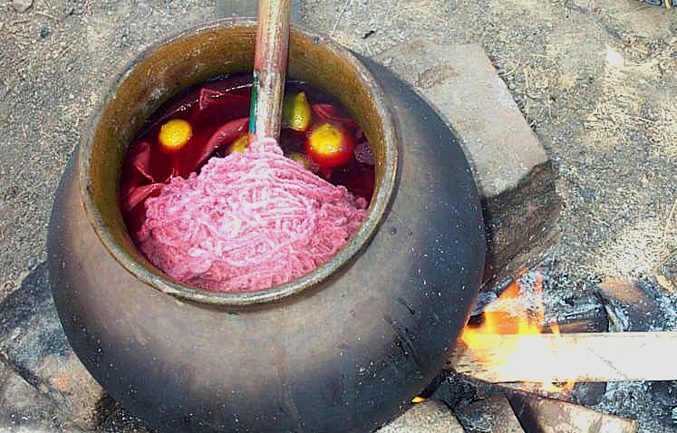
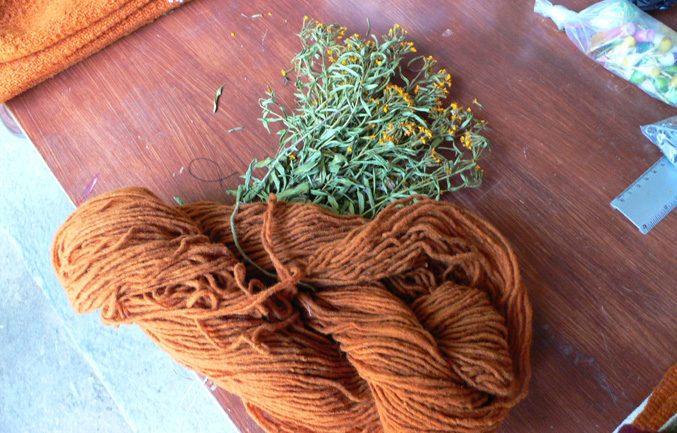
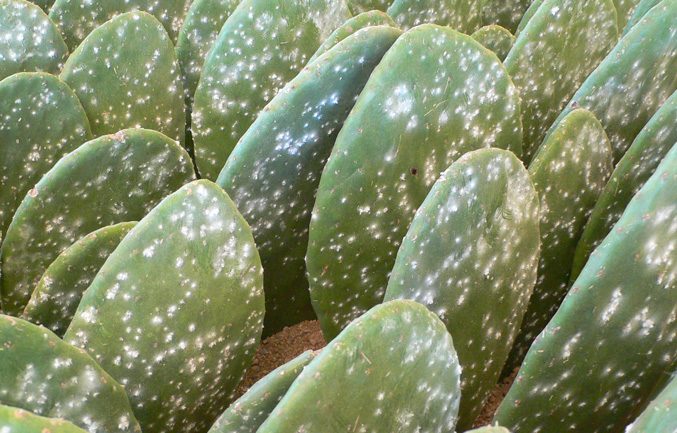
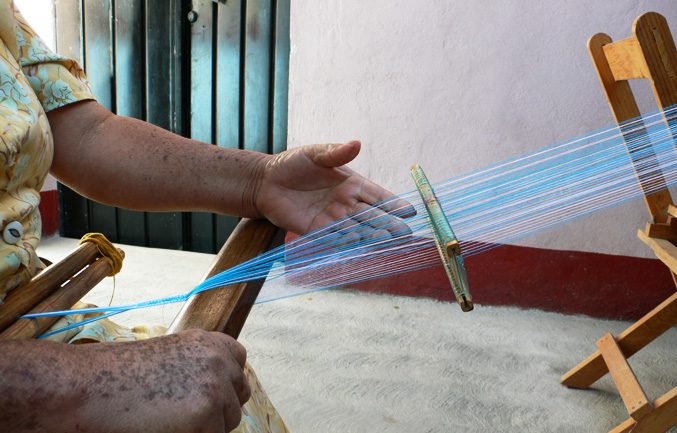
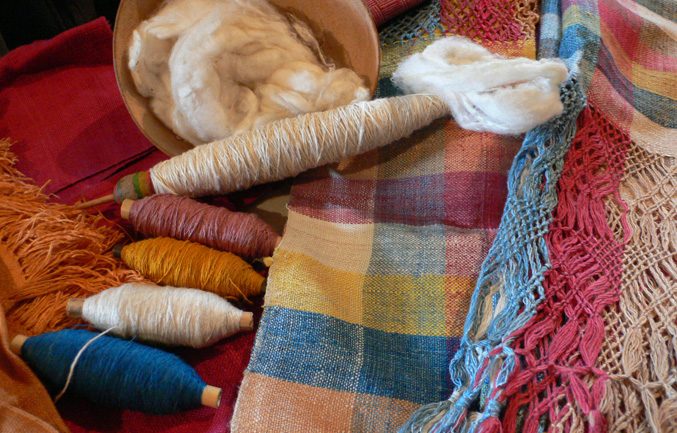
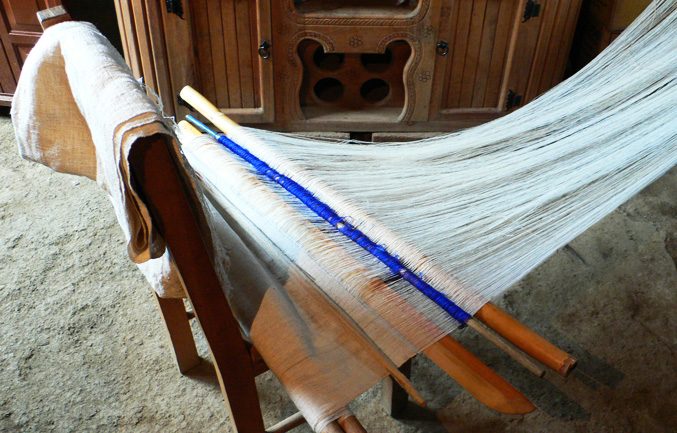
This documentary film is a visual feast for the senses that takes us on a sensory journey across Oaxaca, Mexico. Here we meet the exemplars - the outstanding artists, artisans, and curators who are keeping the weaving traditions alive. This film captures sense of place, history, culture, and diversity. It creates a vital thread from past to future, linking the emotional and aesthetic work that goes into the creative process with the economic implications of survival for the art and the culture. Featured are extraordinary weavers who work on the two-harness floor loom, the back-strap loom, and use fly shuttle weaving. We learn about the process of cultivating, spinning and weaving silk. We understand the environmental and sustainable responsibility for using natural dyes, and the importance of finding world markets to sell so that the culture endures. The film features several of my favorite weavers: Federico Chavez Sosa, Erasto "Tito" Mendoza Ruiz, and Abigail Mendoza. It also includes commentary by my friends Eric Chavez Santiago, education director at the Museo Textil de Oaxaca, and Janet Chavez Santiago, a linguist and weaver. There is so much that this 1:16:19 DVD film by University of Wisconsin-Madison professor Carolyn Kallenborn covers in such a relatively short period. And you can choose to watch in English or in Spanish. We hear the Zapotec language spoken and how its revival is a way to sustain cultural traditions. We appreciate weaving as a community endeavor to support generational continuity. We learn how designs are created on the tapestry loom extrapolated from archeological stone carving. We see how the cochineal bug is cultivated on the prickly pear cactus and the chemical oxidation of indigo. To ground us, life in Oaxaca is interwoven throughout. We discover how American students can intern with Oaxaca weavers for cultural exchange. We realize that it takes 20 days to hand spin enough silk to make one shawl and five days to weave it. We come to value the time and energy it takes to work by hand -- to wash, card, spin, dye and weave a quality textile. Carolyn Kallenborn's in-depth film is ambitious, comprehensive, and compelling. It is a must-see for every lover of woven art, every student and teacher who is involved in the creative process, and all who want to know more about Oaxaca and its extraordinary textile traditions. by Norma Hawthorne, Oaxaca Cultural Navigator LLC. We have a selection of Federico Chavez Sosa's rugs for sale. 100% of the proceeds go directly to the weaver. See oaxacaculture.com
~Norma Hawthorne